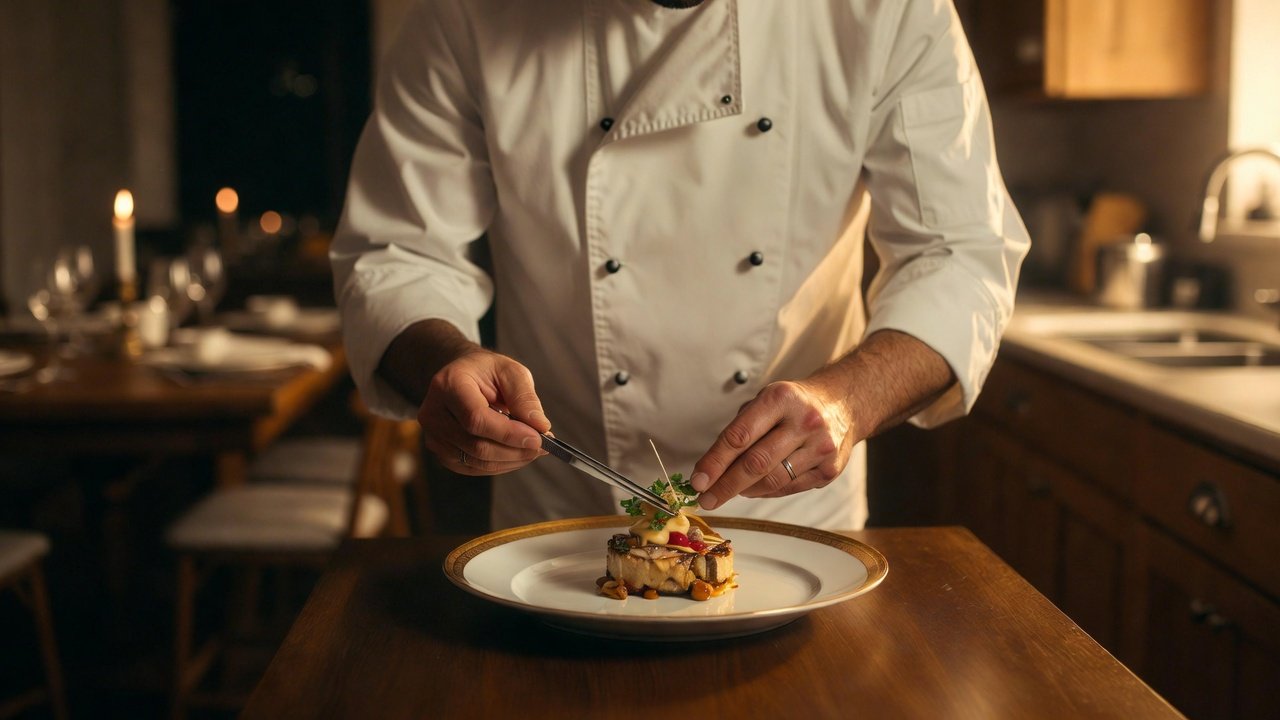
I’ve cooked for hundreds of clients as a professional chef, and I learned something early on that changed everything about my private chef business. It wasn’t about knowing how to sear a scallop or balance a sauce. It was about understanding that the meal itself is only half of what clients are paying for. The other half is the entire experience, from the moment I arrive to the way I present each course to how clean the kitchen is when I leave.
Most chefs focus on the food because that’s what we know. But here’s what I discovered: clients rebook based on the full experience, not just the taste of the entrée. A perfect dish served with awkward timing or poor presentation won’t earn you a second dinner. But a solid meal delivered with confidence, clear communication, and meticulous follow-up creates an experience clients talk about for months.
In this guide, I’ll walk you through the exact process I use to deliver private dinners that consistently earn rebooks. This isn’t theory. This is the system I’ve refined across many private events, and it works because it addresses every touchpoint that shapes how clients remember that evening.
Why Delivery Is What Really Separates You
When a potential client first reaches out, they’re making a bet on you. They’ve chosen you over other chefs, and they’re imagining what that night will feel like. What you deliver has to match, or exceed, that imagination. That’s where most chefs stumble. They nail the cooking but miss the choreography.
Clients don’t rate their favorite chef by whether the sauce was perfectly emulsified. They rate that chef based on whether they felt taken care of, whether the evening flowed smoothly, whether the chef seemed confident and professional. In other words, execution matters far more than technique for the rebook decision.
The chefs who build sustainable private chef businesses aren’t necessarily the ones with the most impressive culinary credentials. They’re the ones who treat each dinner like a performance, one where every detail, from the moment they pull into the driveway to the final thank you, is dialed in. That consistency is what creates loyalty. And loyalty is what turns a one-time booking into a pipeline of regular clients.
The Pre-Event Checklist: What to Confirm Before You Arrive
This is where rebooks start. Not at the table. Not after the meal. They start in the days before the event, when you’re confirming details with your client. Most chefs skip this step or rush through it. I’ve learned that 20 minutes on a pre-event call saves hours of stress on the day.
A few days before the dinner, I confirm five things with the client. First, the exact arrival time and parking situation. I always arrive up to 10 minutes early, never late, never 30 minutes early. Early arrival lets me assess the kitchen, claim counter space, and set up at a calm pace. But I need to know where to park and whether the client expects me to ring the front door or let myself in. That clarity prevents the awkward moment where you’re circling the block or standing on the porch wondering what to do.
Second, I confirm the serving time. I ask specifically, “What time would you like the first course on the table?” Then I work backward. If they want the main course at 7 p.m., I know I need to start plating at 6:55. That clarity eliminates guessing.
Third, I run through the menu one more time. Are there any last-minute allergy concerns? Does anyone want to swap a dish? Is there anything I should know about the guests’ preferences? This is where I often suggest menu adjustments if someone is gluten-free, since that’s an area where I have deep expertise and can offer genuinely better options.
Fourth, I confirm what they’re providing. Plates, cutlery, glasses, serving utensils. I confirm the client has everything they need. I provide everything else. Setting this expectation upfront prevents a situation where I show up and discover they’re expecting me to provide fine china.
This pre-event call takes 10 minutes. It builds confidence on both sides and catches problems before they become problems on the evening.
Arrival and Kitchen Setup: Making a Great First Impression
I pull up 10 minutes early. I unload my gear: my toolbox with all my knives and utensils, my tote with cookware and prep equipment, my supplies, my cleaning supplies. Everything fits into a car, and it’s organized so I can move efficiently.
I say hello, thank the client for having me, and ask them to show me the kitchen. This is a critical moment. I’m not just scoping the space. I’m also setting the tone. I’m calm, professional, and immediately in control of my environment. I can assess any kitchen in about two minutes and know exactly where everything goes.
I set up my station in a way that leaves their kitchen accessible. I take up the space I need, a clear counter for prep, access to the stove, room to organize my supplies, but I’m conscious that this is their home, not my restaurant kitchen. I explain what I’m doing as I set up. “I’ll be prep-heavy in this area for the next two hours, then I’ll clear this completely when I start plating.” That communication matters because it shows respect for their space.
I also ask if clients want to watch, chat, or stay out of the kitchen. Some people love watching the process. Others want to relax with their guests. Both are fine with me. I’m equally comfortable performing or working quietly in the background. What I don’t do is make them feel uncomfortable in their own kitchen.
Prep Time: Making Everything from Scratch, On-Site
I need 2 to 3 hours of prep time from arrival to the first course on the table. That’s not negotiable. Everything I serve is made from scratch in their kitchen. I’m not bringing pre-made components or reheating anything. The proteins are raw when I arrive. The vegetables are whole. The sauces are made during that prep window. That’s the differentiator.
Three hours sounds like a long time, but it goes fast once you get going. I’m managing multiple components, timing everything so it all comes together, plating, and keeping the kitchen organized the whole time. If you’re expecting me to show up with food 80% done, you’ve got the wrong chef.
During prep, I’m working steadily but not frantically. My pace is efficient and calm. If clients want to chat or ask questions about the process, I’m happy to answer. If they want to stay in the kitchen and watch, that’s fine too. I’m comfortable either way, and that comfort builds their confidence.
By the end of the prep window, if the booking includes a starter (Signature or Chef’s Table packages), I’ve got that ready to go. The main course components are ready, and I’ve got my plating station organized. I’m ready.
Starter Service: Timing and Presentation
For Signature and Chef’s Table packages, clients choose between a charcuterie board and spinach artichoke dip. Both are served 30 to 45 minutes before the main course. The timing depends on what works best for that client’s schedule and preference.
I bring the starter out in a way that signals to the guests that dinner is beginning to unfold. For charcuterie, I present it on a platter I brought. For the dip, I bring it in the dish with napkins and crackers arranged nearby. Both are simple, but the presentation is intentional. I’m not just dropping it on the table. I’m serving it.
This 30 to 45 minute window is crucial. It gives guests something to enjoy while I’m finishing final prep in the kitchen. It preps their palate. And it gives me a clear signal: once the starter is finished, I know the main course is about 30 to 45 minutes away.
The Dinner Announcement and Course Service
Five minutes before the main course is ready, I go to the dining room and let the guests know. The script is specific: “Dinner will be served in five minutes. Please make your way to the table.” That phrasing is deliberate. It’s not urgent or bossy. It’s clear and professional. It gives them time to wrap up conversation, take a final sip, and settle at the table.
When the food hits the table, I’m ready. I plate courses one at a time. As I serve each course, I describe the dish: the proteins, the technique, any important details. Some guests want a full description. Others want me to be quiet. I read the room and adjust. What I always do is present the food with confidence.
I clear plates as guests finish and make the transition to the next course smooth and seamless. I’m attentive without hovering. I’m present without interrupting. The goal is for the meal to feel like a natural progression, not a performance that requires their attention.
This is where discipline matters. Timing between courses, plating consistency, the ability to adjust on the fly if something takes longer than expected. If prep runs long, I don’t panic. I adjust the serving time, communicate that to the client, and deliver the food hot and plated correctly. Rebooks are built on this kind of reliability.
Cleanup: Leaving the Kitchen Better Than You Found It
After the last course, I clear the plates and I get to work. I hand-wash and dry all the dishes, except glasses, which the client takes care of. I spray and wipe down all the counters, the stove top, the sink, and any other surfaces I used during prep. Then I load all my equipment back into my car.
The goal is simple: leave the kitchen cleaner than it was when I arrived. Not clean enough. Cleaner. That detail matters more than you’d think. It’s the last thing clients remember before I leave. A spotless kitchen is the final signal that you’re a professional.
I thank everyone for a great evening, I mention that I’m excited about their feedback, and I leave. That entire process, cleanup and departure, takes about 30 minutes depending on the size of the event.
What You Actually Control
The food matters, but the rebook decision is rarely made on the food alone. It’s made on whether the client felt taken care of, whether the evening went smoothly, whether you showed up as a professional who had everything under control.
If you nail the pre-event checklist, arrive on time, set up with confidence, deliver food on schedule, describe each dish, clean meticulously, and follow up genuinely, you’ve done 90% of what it takes to earn a rebook. The remaining 10% is cooking well, which I’m assuming you can already do.
Start treating each private dinner like you’re building a relationship, not just completing a transaction. Clients notice. That’s how one dinner becomes five.
Next Steps: Mastering the Full Delivery Experience
The system I’ve outlined here works because it’s built from real events and refined through real feedback. But knowing the system and executing it consistently are two different things. Execution is where most chefs struggle.
If you want to go deeper on this, if you want to master the subtleties of high-touch client delivery, build systems that scale without sacrificing quality, and turn your private chef business into a reliable pipeline of recurring bookings, I’m building a full course on exactly this. It covers everything from client onboarding to managing five-star experiences to handling difficult requests.
In the meantime, you can also book a 1 to 1 coaching call with me. We’ll audit your current delivery process, identify where you’re losing rebooks, and build a specific action plan to tighten your system. That’s a great place to start if you’re ready to stop leaving money on the table and start building a reliable, repeat-client business.
The rebook is everything. Everything else follows from it.